.png?w=2172&h=724)

Quick answer: Most solar flame torch problems come down to one of three things — not enough charge, a dirty or shaded solar panel, or a dusk sensor confused by nearby light. The fix is almost always the same: give the panel a full day or two of direct sun, wipe it clean, and make sure no porch or street light is shining on it at night. Here’s how to diagnose and get your torches glowing again.
Solar flame torches are simple devices, so when one stops working the cause is usually easy to find. This guide walks through the common issues with our Solar Flame Torch Lights and how to fix them — plus the care habits that keep them running for years.
My solar flame torch won’t turn on
Work through these in order — they solve the large majority of “won’t turn on” cases:
- Give it a full charge first. A brand-new torch (or one that’s been boxed up) needs a full day or two of direct sun before it will run properly at night. If it’s barely been in the sun, that’s the whole problem.
- Check what’s near the panel after dark. These torches use a dusk-to-dawn light sensor — they only switch on when the panel senses darkness. If a porch light, street lamp, or window light shines on the panel at night, the torch “thinks” it’s still daytime and stays off. Move it away from other light sources.
- Make sure the panel actually gets direct sun. A torch placed in shade, under a tree, or behind glass won’t collect enough energy to light up. Relocate it to the sunniest spot you have.
It’s dim, or the flame isn’t flickering properly
Low or weak output almost always means the battery didn’t get a full charge:
- Dirty panel: dust, pollen, leaves, or bird droppings on the solar panel dramatically cut how much it charges. Wipe it clean (see below).
- Short winter days: in winter the panel gets less, weaker sunlight, so runtime naturally drops from about 12 hours down to around 5. That’s expected, not a fault.
- Partial charge: a cloudy stretch leaves the battery topped up only part-way. A few good sunny days will restore full brightness.
It worked for a while, then stopped
If a torch performed well and later faded, the usual culprits are a gradually dirty panel or, after a couple of years of daily use, an aging rechargeable battery — the one wear part in any solar light. Clean the panel and give it several full sun days first; if runtime is still very short after that, the battery has simply reached the end of its life cycle, which is normal for any solar fixture.
How to clean and maintain your torches
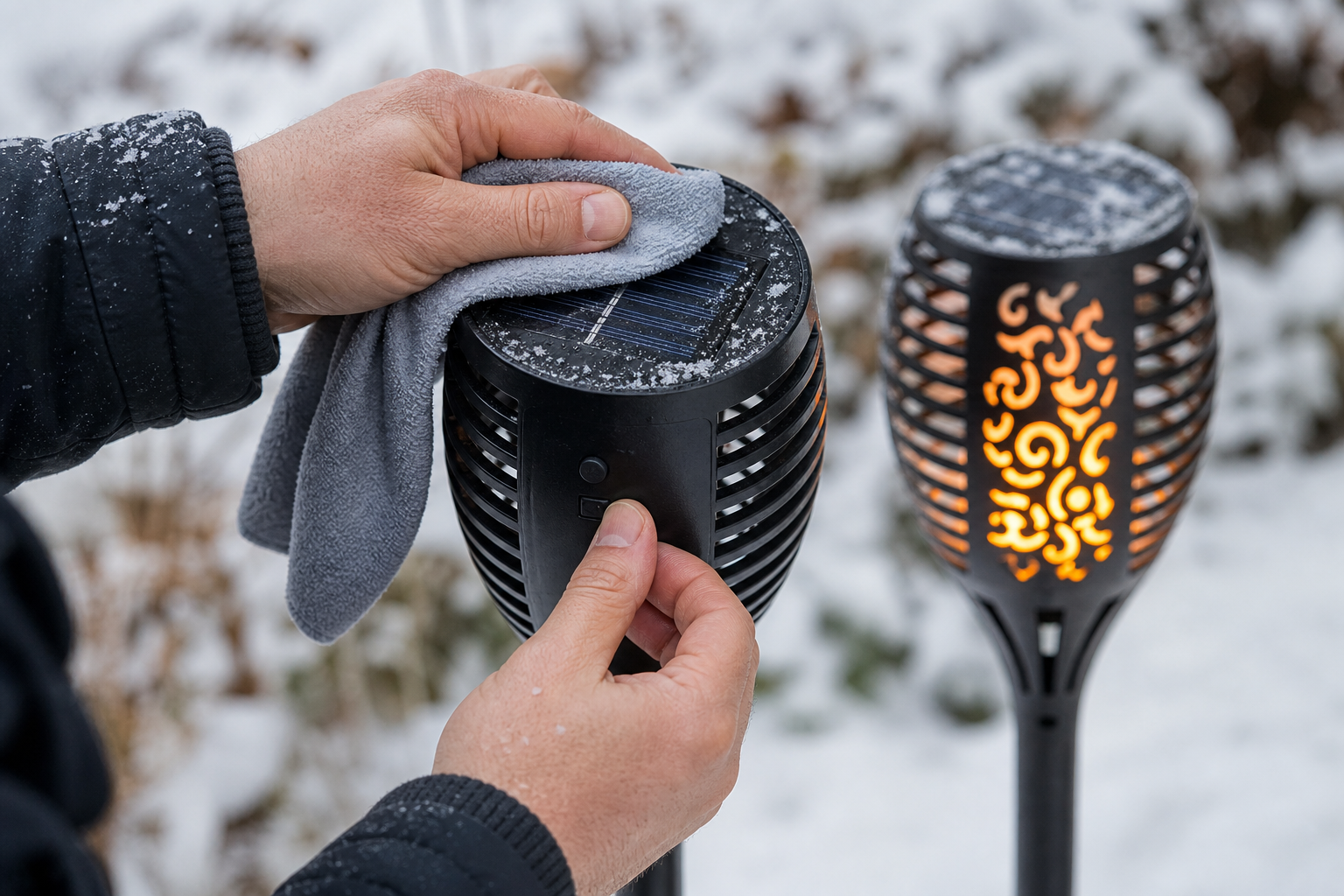
- Wipe the solar panel with a soft, damp cloth whenever it looks dusty — a clean panel is the single biggest factor in performance.
- Keep the panel unobstructed by plants or decorations as they grow through the season.
- They’re rated IP67 waterproof, so rain is not a problem and you don’t need to bring them in when it’s wet — just avoid fully submerging them.
- Check the stake is firm in the soil after storms or seasonal ground shifts.
Winter care and off-season storage
You can leave the torches outside year-round — they’re built for it — and simply expect shorter winter runtime. If you’d rather pack them away for the off-season, store them indoors at room temperature with a partial charge rather than fully drained; that’s the gentlest state for a rechargeable battery. When you set them out again in spring, give them a couple of full sun days before expecting full runtime.
Getting the best possible runtime
- Place torches where the panel gets direct midday sun, not just morning or filtered light.
- Keep the panel clean and clear.
- Angle matters less than exposure — open sky beats a brighter-but-shaded corner.
- Remember the honest ceiling: up to ~12 hours in summer, ~5 in winter, on a 2200mAh battery.
Frequently asked questions
Why won’t my new solar torch light turn on?
It most likely hasn’t charged enough yet. A new torch needs a full day or two of direct sun before it runs at night. Also check that no porch or street light is shining on the panel after dark — that can trick the dusk sensor into staying off.
Why is the flame dim or not flickering?
Almost always a low charge. Clean any dust or debris off the solar panel, move it into fuller sun, and give it a few good sunny days. In winter, shorter daylight naturally reduces brightness and runtime.
My torch worked before and now doesn’t — what happened?
Usually a dirty panel or, after a couple of years, an aging rechargeable battery. Clean the panel and recharge in full sun first. If runtime is still very short, the battery has reached the end of its normal life.
Can I leave them out in the rain and over winter?
Yes. They’re rated IP67 waterproof and built for all-season outdoor use, so rain and winter are fine — expect shorter runtime in winter. For off-season storage, keep them indoors with a partial charge.
How do I clean a solar flame torch?
Wipe the solar panel with a soft, damp cloth to remove dust, pollen, leaves, or bird droppings. A clean panel charges far better and is the easiest way to keep the torches bright.
More solar torch guides
- Solar flame torch lights — complete guide
- Do solar flame torches really work? — questions answered
- Shop all solar torch lights
Prices and specifications are current as of publication and may change. See the product page for the latest details.