.png?w=2172&h=724)

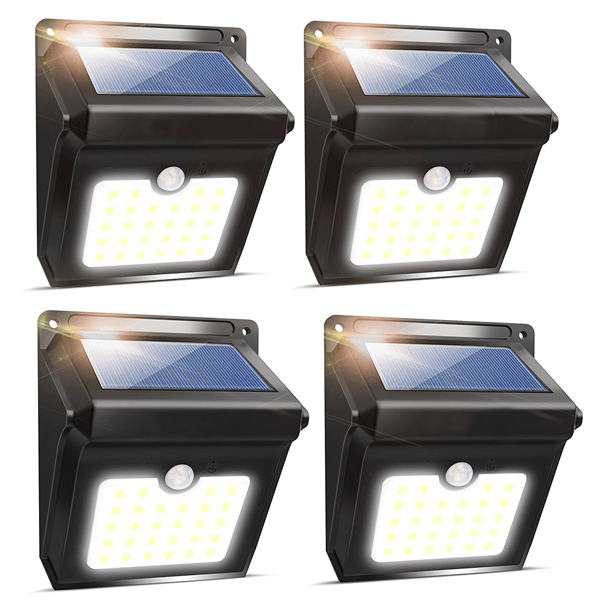
If a solar light seems less dependable in September, record what it does before buying another one. A useful solar light runtime log separates daylight exposure, settings and evening observations. It helps you describe a problem accurately without assuming that every short evening means the battery has failed.
This is a household observation exercise, not a laboratory performance test. You will not establish a certified runtime, but you can discover whether the issue follows a particular location, setting or light.
Give each light an identity
Label the locations in your notebook: front path, patio corner and side gate, for example. Record the exact model and the mode selected. Avoid relying on “the small one” when several lights look alike.
A solar motion light and solar string lights do different jobs. A motion-controlled product may not behave like an always-on decorative string. Read the instructions so that normal mode behavior is not mistaken for a fault.
Keep essential access lighting independent of this experiment. Decorative solar products should not be the only provision for a route where reliable illumination is necessary.
Write down the day, not just the night
Record obvious shade, cloud conditions and anything covering the panel. Check whether a fence, roof or plant blocks light at the panel's actual position. Do not estimate exact solar exposure simply from how bright the garden feels at lunchtime.
The U.S. Department of Energy explains that solar energy reaching a location varies with time, season and the sun's angle. That supports checking changing exposure; it does not establish the runtime of a particular retail light.
An easy entry might read: “Patio string; usual mode; panel shaded by fence during afternoon; lit when checked after dinner.” Separate what you saw from what you infer.
Compare like with like
For several ordinary evenings, check at similar points in your routine. Write “off at the later check” rather than assigning an exact shutoff time you did not witness. Record whether you changed a setting or moved the panel.
Change only one thing at a time, within the instructions. If you relocate the panel and change the operating mode together, you will not know which change affected the result. Do not dismantle sealed components, substitute unspecified batteries or modify wiring as part of the log.
If there is visible damage or abnormal operation, stop using the item and seek the appropriate support. Observation is not a reason to keep a potentially damaged electrical product running.
Use the record to make the next decision
If several units perform differently in different positions, investigate placement before replacing the entire set. If one unit repeatedly behaves differently under comparable conditions, send the model, mode and dated observations to support. Those details are more useful than “it does not last long.”
Our garden-lighting ideas focus on appearance. A short operating log adds another consideration: whether the chosen arrangement suits your actual evenings. Buy more only when you understand which job remains unmet. Sometimes the better change is a suitable new location or a different lighting system, not another decorative unit.