.png?w=2172&h=724)

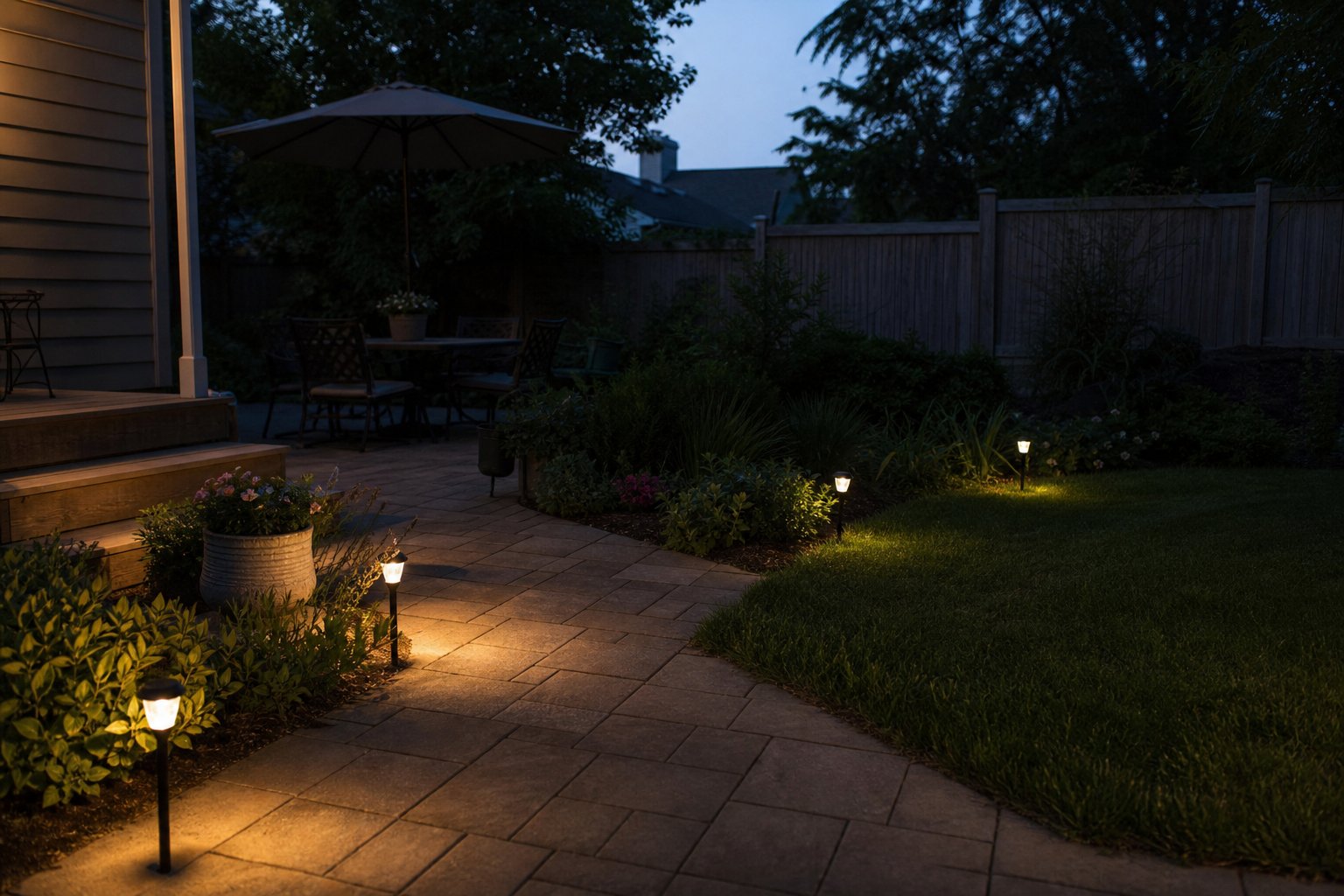
Quick answer: for most people, yes—solar outdoor lights are worth it for path, accent, and decorative lighting where you want no wiring, near-zero running cost, and easy DIY setup. They’re less ideal when you need bright, guaranteed all-night security light or you live somewhere very shady or with short winter days.
Solar outdoor lighting has come a long way, but it’s still not magic—and whether it’s worth it depends entirely on what you’re lighting and why. Below we break down the real costs, the very low effort, and the honest trade-offs, so you can see where solar shines and where a wired setup makes more sense.
What do solar lights actually cost?
The upfront price is where solar wins outright. Decorative fixtures start low—our solar flame torch lights run $9.99, and a set of solar string lights with a remote is $24.99. There’s no electrician, no trenching for cable, and no add-on to your power bill, because the panel charges the built-in battery by day and the light runs on that stored energy after dark.
The one ongoing cost is the rechargeable battery. Like any rechargeable, it slowly loses capacity and typically needs swapping after about one to two years—usually an inexpensive AA-style cell. Against the installation cost of a wired system, the lifetime spend on solar is generally far lower.
How much work are solar lights?
Close to none, which is solar’s other big selling point. You stake or hang the fixture where it gets sun, switch it on, and that’s the entire install. Built-in sensors switch the lights on at dusk and off at dawn—no timers, no wall switches, no app required. Maintenance is an occasional wipe of the panel so dust and pollen don’t block charging, plus that once-a-year-or-two battery change. For anyone who doesn’t want to hire an installer or dig up the yard, that near-zero effort is a genuine advantage.
Where solar lights are genuinely worth it
In several clear situations, solar is the easy winner:
- Accent, path & decorative lighting. This is solar’s sweet spot. A run of solar glass brick path lights along a walkway, string lights over a patio, or flame torches lining a bed all look great and cost almost nothing to run.
- Renters and anyone who can’t wire. Nothing is permanent—most styles need no drilling into a landlord’s wall, and every fixture moves with you. See our roundup of the best solar lights for renters for specific picks.
- Hard-to-wire spots. A back fence, a far corner of the yard, or a detached shed is a pain to run cable to. Wireless options like solar post cap lights mount with a couple of screws and skip the wiring entirely.
- Low-effort curb appeal. If you want the yard to glow at night without touching a switch, dusk-to-dawn solar does exactly that.
Where solar lights fall short (and what to do)
Being honest means naming the weak spots too:
- Output depends on the sun. Our flame torches glow up to 12 hours on a full summer charge but closer to 5 in winter. In heavy shade or through short, gray winter days, expect dimmer, shorter-lived light.
- Softer, more ambient light. Solar is gentler than a wired fixture running on mains power. That’s lovely for atmosphere, less so when you need to flood a whole driveway.
- Not a standalone security system. For bright, guaranteed, all-night coverage, a single always-on decorative solar light won’t cut it. Pair it with a solar motion light—it stays dark and fires a bright burst only on movement, which stretches the battery—or run a wired system where you need certainty.
- A few direct-sun-only exceptions. Some products skip the battery entirely: our solar water fountain runs straight off the sun, so it pauses when clouds pass. That’s normal behavior, not a fault, but worth knowing before you buy.
If you’re weighing a full landscape install, our solar vs. low-voltage landscape lighting guide goes deeper on the brightness-versus-convenience trade-off.
Solar lights: pros and cons at a glance
| Where solar wins | Where solar struggles |
|---|---|
| No wiring, outlets, or electrician needed | Runtime & brightness depend on available sun |
| Free to run—no impact on your power bill | Softer, more ambient than wired mains lighting |
| Cheap to start (decor fixtures from $9.99) | Shorter runtime in winter, clouds, or deep shade |
| Auto on at dusk, off at dawn—hands-free | Not enough on its own for guaranteed security light |
| Renter-friendly and easy to reposition | Battery is a wear part, replaced every ~1–2 years |
How to decide if solar is right for you
Run through a quick checklist before you buy:
- Check the sun. Does the spot get several hours of direct daylight? If it’s deep, all-day shade, solar will disappoint—go wired there.
- Define the job. Ambience, path-marking, or decoration? Solar is ideal. Bright, dependable security or task lighting? Add a motion light or wire it.
- Factor in your winters. If you get long, dark winters, plan for reduced runtime and place panels where they catch the most low, midday sun.
- Match the fixture to the mount. Post caps for fences and decks, stakes for beds and paths, strings for patios—pick the shape built for your surface.
For most yards the smart move is a mix: solar for the decorative 90%, and a dedicated motion or wired light for the one spot that truly has to be bright.
Frequently asked questions
Are solar lights bright enough to be useful?
For paths, patios, accents, and decoration, yes—they give a warm, ambient glow. For flooding a driveway or covering an entry for security, a single decorative solar light is too soft; choose a solar motion light or a wired fixture for those jobs.
Do solar lights work in winter?
They work, but for less time. Shorter days and weaker, lower-angle sun mean less charging, so runtime drops—flame torches rated up to about 12 hours in summer may run closer to 5 in winter. Placing the panel where it catches the most winter daylight helps a lot.
How long do solar lights last?
The fixtures themselves last for years. The rechargeable battery is the wear part and usually needs replacing after roughly one to two years, which is inexpensive and simple in most models.
Are solar lights worth it for renters?
They’re one of the best options for renters—no wiring and, for most styles, no drilling into a landlord’s wall, and everything moves with you when you leave. Post caps, stakes, and string lights all set up in minutes with no permanent marks.
Can solar lights replace wired security lights?
Not on their own. For dependable, bright, all-night coverage, pair a solar motion light—dark until it senses movement, then a bright burst—with your decorative solar setup, or use a wired system where guaranteed output matters most.
More guides
- Best solar lights for winter & short days
- Solar vs. low-voltage landscape lighting
- The best solar lights for renters
Specifications are current as of publication and may change. See product pages for details.